
Every driver has been taught to check their mirrors, look over their shoulder and proceed with caution. It’s a fundamental rule of the road. Yet, despite our best efforts, collisions still happen during lane changes and reversing manoeuvres. The reason is often not a lack of attention, but a fundamental design flaw in how we see the world from inside a vehicle: the blind spot. These areas of zero visibility are an unavoidable consequence of vehicle design and relying on mirrors alone leaves drivers dangerously exposed.
As vehicles have grown larger and their designs more focused on crash safety, these blind spots have expanded, creating significant risks, particularly when reversing. While mirrors are essential tools, they cannot show a complete picture. This is where technology steps in, offering a solution that fills the gaps and provides the comprehensive awareness needed for safe driving. Understanding what blind spots are and why mirrors fail to eliminate them is the first step toward adopting safer habits and leveraging the right technology.
What Are Blind Spots?
A blind spot is any area around a vehicle that cannot be directly observed by the driver, either by looking forward or through the use of standard rear-view or side mirrors. These zones of invisibility are created by the vehicle’s own structure, the roof pillars, headrests, body panels and even passengers. While most drivers are aware of the blind spots over their shoulders, the largest and most dangerous one is often behind the vehicle.
The size and shape of blind spots vary significantly depending on the vehicle type:
- Cars (Sedans and Hatchbacks): These typically have the smallest blind spots, but the area directly behind the trunk is still completely obscured. This zone can easily hide low-lying objects like curbs, bollards or even a small child.
- SUVs and Utes: As vehicle height increases, so does the rear blind spot. An SUV’s high beltline and large rear pillars create a massive invisible area that can extend for many meters. For a ute with a hard tonneau cover or a canopy, rear visibility through the main cabin mirror can be reduced to almost zero.
- Vans and Commercial Vehicles: Cargo vans have no rear window, making the central rear-view mirror useless. Drivers are entirely dependent on their side mirrors, leaving a huge blind zone directly behind the vehicle that is large enough to hide another car.
This rear blind spot is particularly dangerous in driveways and parking lots. Tragic statistics from Australia show that one child is run over in a driveway each week and up to 20% of all vehicle accidents occur during reversing. These incidents happen because the driver simply cannot see what is in their path.
Why Side and Rear Mirrors Aren’t Enough
Mirrors are indispensable for safe driving, but they are tools with specific functions and inherent limitations. They are designed to reflect light from a distance, giving you a view of traffic approaching from behind and to the sides. However, they are physically incapable of showing you the area directly adjacent to or behind your vehicle.
The problem lies in the angles. Your interior rear-view mirror can only show you what is visible through the rear window. Anything below the level of the trunk or tailgate is cut off. Side mirrors, even when correctly adjusted to minimize the blind spot next to the car, create a narrow, panoramic view that does not cover the ground immediately behind the rear wheels.
Turning your head, the classic “head check”, is crucial for lane changes, but it is of little help when reversing. Your view is still obstructed by the car’s C-pillars, headrests and the rear seats. You might be able to see a tall adult standing a few feet away, but a toddler, a pet or a bicycle left on the driveway will remain completely hidden. Relying on mirrors alone means you are reversing with incomplete information, essentially guessing that the path is clear.
How Cameras Fill Visibility Gaps
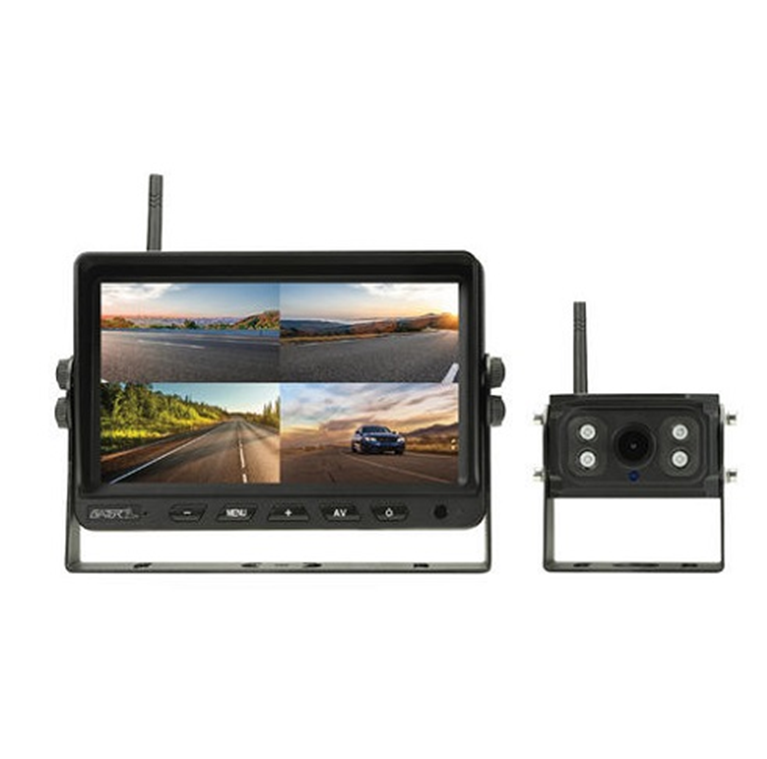
This is where camera technology provides a definitive solution. By placing a “digital eye” on the rear of the vehicle, drivers gain a clear, unobstructed view of the exact area their mirrors cannot see. As expert providers of reversing cameras and reversing camera kits, Campad Electronics knows that this technology fundamentally changes driver awareness.
Eliminating the Rear Blind Spot
A reverse camera is typically a wide-angle lens mounted near the license plate. When you engage the reverse gear, it transmits a live video feed to a screen in your dashboard or a clip-on mirror monitor. This camera looks downward, capturing the ground within inches of your bumper and extending outward. Suddenly, the dangerous blind zone is eliminated. You can see the forgotten skateboard, the stray pet or the wandering toddler.
The effectiveness of this technology is backed by extensive research. Studies from Monash University found that fitting vehicles with reversing cameras was associated with half the rate of back-over crashes compared to cars without them. The study also linked cameras to a 30% reduction in fatal and serious injury crashes involving pedestrians.
Enhancing Situational Awareness
Modern camera systems do more than just show a picture. Many include features that further enhance safety:
- Wide-Angle Lenses: Capturing a field of view up to 170 degrees, these lenses show you not just what is directly behind you, but also what is approaching from the sides.
- Dynamic Gridlines: On-screen guidelines move as you turn the steering wheel, predicting your vehicle’s trajectory and making it easier to judge distances and navigate tight spaces.
- Night Vision: Infrared LEDs or advanced low-light sensors provide a clear view even in complete darkness, overcoming the limitations of standard reverse lights.
With new regulations in Australia mandating reversing technologies on all new vehicles from November 2025, the importance of this technology is officially recognized. For drivers of older cars, utes or vans, retrofitting a high-quality camera system is one of the most effective safety upgrades available.
Conclusion
Blind spots are an unavoidable reality of vehicle design, but the accidents they cause are not. While mirrors and head checks remain essential driving habits, they are not enough to guarantee safety, especially when reversing. Camera technology offers the missing piece of the puzzle, providing a clear and comprehensive view of the most dangerous areas around your vehicle.
By embracing this technology, you are not just making parking easier; you are adding a critical layer of protection for your family, your community and yourself. To learn more about the different types of systems available for your specific vehicle, you can explore a wide range of reversing cameras and reversing camera kits designed to eliminate blind spots for good.